Hip pain has a particular signature. It does not feel like a joint problem at first. It feels like a limp you started doing without thinking, a chair you stopped using, a flight of stairs you walk up sideways. By the time most patients reach Dr. Swaroop's Ortho and Polyclinic in Wakad, they have been adjusting around the hip for two to four years.
Total hip replacement is one of the most predictable, highest-success operations in modern medicine. Properly done, it gives a patient 20 to 25 years of pain-free walking. Dr. Solunke trained in hip arthroplasty in Germany at St. Josef Hospital, Paderborn - a country where hip replacement is performed at one of the highest rates per capita anywhere in the world.
What Is Total Hip Replacement?
The hip is a ball-and-socket joint. The ball is the head of the femur (thigh bone). The socket is the acetabulum, a cup in the pelvis. Cartilage covers both surfaces and lets the joint glide. When that cartilage wears away, bone rubs on bone. The result is the kind of pain patients describe as 'sharp deep ache that never fully goes away'.
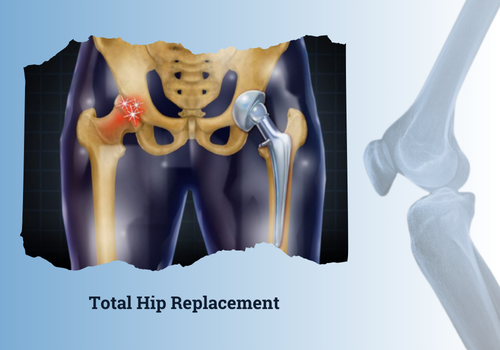
In a total hip replacement, the damaged ball is removed and replaced with a metal stem and a metal or ceramic head. The damaged socket is reshaped and lined with a metal cup containing a high-density polyethylene or ceramic insert. The implant is fixed in place either with bone cement (cemented) or by allowing bone to grow into the implant surface (uncemented).
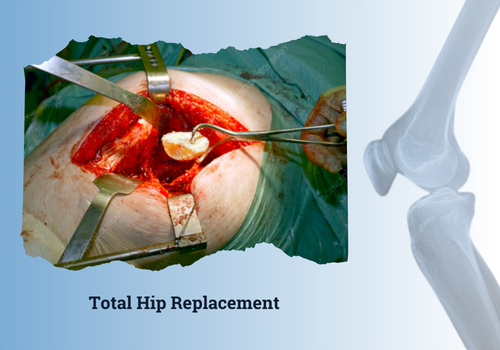
Why Patients Need Hip Replacement
Osteoarthritis
Wear-and-tear arthritis. The most common reason for hip replacement in PCMC and Pune. Develops slowly over years.
Avascular Necrosis (AVN)
The blood supply to the femoral head is cut off and the bone dies. Common in younger patients (30 to 50). Causes include long-term steroid use, alcohol use and a previous hip injury. AVN cases form a significant portion of Dr. Solunke's hip replacement practice in Pune, especially among IT professionals.
Rheumatoid Arthritis
Autoimmune inflammation that destroys the joint surface
Hip Fracture in Elderly Patients
A fall in the bathroom or on stairs that breaks the femoral neck. Hip replacement gives elderly patients a much better functional outcome than fixation in many of these cases.
Failed Previous Hip Surgery
A revision hip replacement when an earlier hip implant has loosened, infected or worn out.
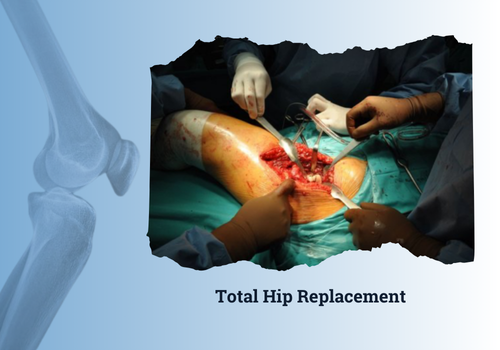
Three Surgical Approaches - Which One Is Right for You?
Posterior Approach
The most established approach worldwide. The surgeon enters from the back of the hip. Excellent visibility, large range of motion, suitable for almost all patient types. Slightly higher dislocation risk if patients do not follow precautions in the first 6 weeks.
Anterior Approach
The surgeon enters from the front of the hip, going between muscles rather than cutting through them. Faster early recovery and lower dislocation risk. Best for normal-build patients with reasonable bone quality.
Lateral (Hardinge) Approach
The surgeon enters from the side. Very stable hip post-operatively. Slight risk of temporary limping for a few weeks because part of the abductor muscle is cut and repaired.
Dr. Solunke uses the posterior approach for most cases, the anterior approach for fit younger patients and the lateral approach for revision and complex cases. The decision is made together with the patient based on bone quality, body type, age and activity goals.
How the Surgery Is Performed
Hip replacement at our partner hospital is performed under regional or general anesthesia. The procedure takes 60 to 90 minutes for primary cases. The damaged femoral head is removed, the femur canal prepared and a metal stem inserted. The acetabulum is reamed to fit a metal cup. Trial components are tested for stability and leg length. Final implants are placed, the wound closed in layers and a drain inserted.
Patients move to the post-anesthesia care unit, then to a private room within 2 to 3 hours. Walking with a walker begins on day one.
Recovery Timeline After Total Hip Replacement
Day 1 to 3
Walking 10 to 50 metres with walker, sitting in chair for meals, basic toileting with a raised seat. Discharged on day 3 or 4 in most cases.
Week 1 to 2
Walking with walker indoors, gentle hip strengthening exercises. Stitches removed at day 12 to 14.
Week 3 to 6
Walker replaced with stick. Driving may resume around week 6 if right hip operated. Most desk-job professionals return to work in this window.
Week 6 to 12
Stick discarded for most activities. Light gym, swimming and stationary cycling permitted. Long walks and air travel are safe.
Month 3 to 6
Full recovery. Most patients climb stairs normally, sit cross-legged with caution, drive long distances and return to all desired activities including yoga, golf and recreational tennis.
Hip Replacement Cost in Pune
Total hip replacement: Rs. 1.2 to 1.5 lakh (excluding implant and pharmacy)
Implant cost (additional): Rs. 80,000 to Rs. 2.5 lakh depending on brand and material
Robotic hip replacement: Rs. 50,000 additional
Hospital stay 4 to 5 days, pharmacy and pre-op investigations extra
Typical total bill range for primary total hip replacement at our partner hospitals in Pune and PCMC: Rs. 2.5 to 4.5 lakh inclusive. Mediclaim accepted including cashless.