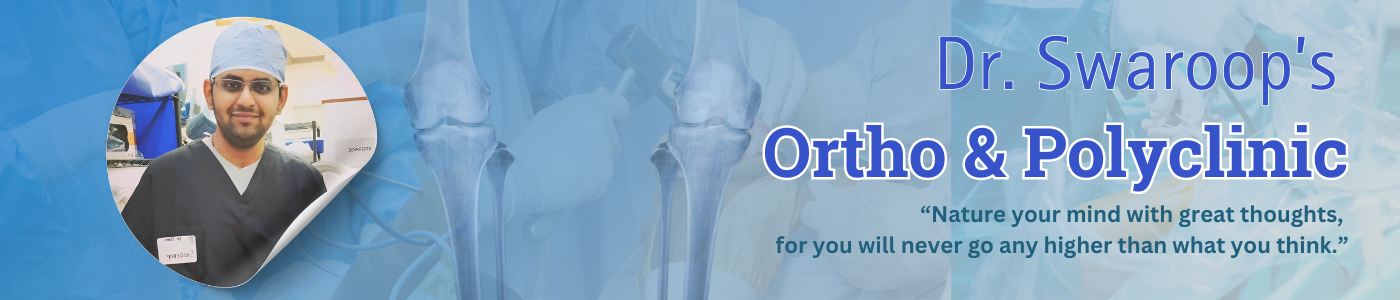
Most knee replacements in Pune still cut through the quadriceps muscle. That cut is the single biggest reason recovery feels slow. The subvastus approach goes around the muscle instead of through it. The implant is the same. The bone work is the same. The muscle stays intact.
Dr. Swaroop Solunke has been performing minimally invasive subvastus knee replacement at his Wakad clinic and operating hospitals for over a decade. He learnt the approach during his German fellowship at St. Josef Hospital, Paderborn, where it is the default technique for primary knee replacement.
What Is Subvastus Knee Replacement?
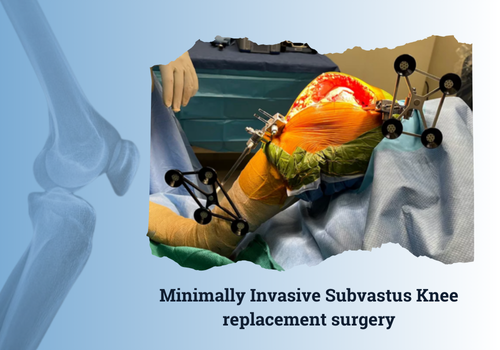
In a standard knee replacement, the surgeon makes a 20 to 25 centimetre vertical cut down the front of the knee, then splits the quadriceps tendon and flips the kneecap sideways to expose the joint. The muscle has to heal back together, which takes time and produces pain.
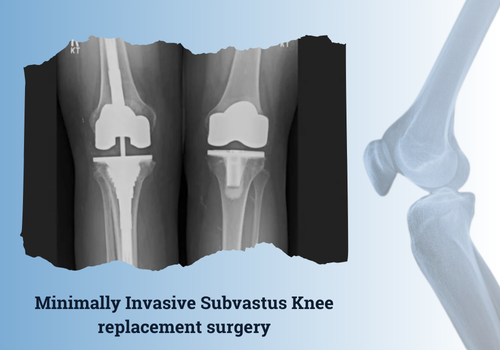
In a subvastus knee replacement, the incision is 8 to 12 centimetres. The surgeon goes under the vastus medialis muscle from below - the muscle is lifted, not cut. The kneecap is rotated rather than flipped. The bone resection and implant placement are identical to standard surgery, but the soft-tissue trauma is much less.
Subvastus vs Traditional Knee Replacement - Day-by-Day Recovery
Day of Surgery
- Subvastus: Walking with walker by evening, partial weight-bearing
- Traditional: Bed rest, walking attempt next morning
Day 2 to 3
- Subvastus: Walking 50 to 100 metres with walker, climbing one to two steps
- Traditional: First walking attempts with walker, mostly bed-bound
Week 1
- Subvastus: Discharged home, walking with walker indoors, knee bending 90 degrees
- Traditional: Discharged later, walking with walker, knee bending 60 to 75 degrees
Week 2 to 3
- Subvastus: Walking with stick, climbing full flight of stairs, knee bending 110 degrees
- Traditional: Walker still in use, gradual progression
Week 4
- Subvastus: Most patients walking unaided indoors, returning to office desk work
- Traditional: Stick still required, knee bending 90 to 100 degrees
Week 6 to 8
- Subvastus: Full functional recovery, driving, light gym, full bending
- Traditional: Stick discarded, return to driving, ongoing physiotherapy
Who Is the Right Candidate?
Subvastus is not for every patient. Dr. Solunke screens carefully before recommending it.
You are likely a good candidate if:
- You have advanced osteoarthritis or rheumatoid arthritis with persistent pain
- Your BMI is below 35
- You do not have severe knee deformity (greater than 15 degrees varus or valgus)
- Your quadriceps muscle is reasonably intact
- You have not had previous open knee surgery on the same knee
You may need a different approach if:
- You have severe knee deformity requiring extensive soft-tissue release
- BMI is above 40
- You have had multiple prior knee surgeries with significant scarring
- You have very stiff knees with bending below 70 degrees
How the Surgery Is Performed at Our Wakad Centre
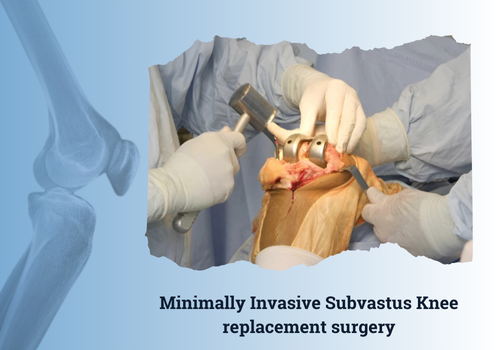
The procedure is done under regional anesthesia (spinal block) most often, with sedation. General anesthesia is used only when medically required. The surgery itself takes 60 to 90 minutes.
Dr. Solunke makes an 8 to 12 centimetre incision over the front of the knee, slightly off-centre toward the inside. He works under the vastus medialis without cutting it, exposes the joint, removes the damaged cartilage and bone and fixes the implant in place using bone cement. The kneecap is resurfaced if needed. Drains are placed and the wound closed in layers. Patients return to their room within two hours.
Pricing for Minimally Invasive Subvastus Knee Replacement
Single subvastus knee replacement: Rs. 1.7 to 2.5 lakh
Bilateral subvastus knee replacement (both knees): Rs. 4.3 to 5.5 lakh
The pricing covers surgery, hospital stay (3 to 5 days), implant, anesthesia and standard post-operative care. Final cost depends on the implant brand chosen (Indian, Korean, US or German). Most insurance and corporate mediclaim plans are accepted on a cashless basis.
Recovery and Physiotherapy at Wakad
Physiotherapy starts on day one, in the hospital, before discharge. Once home, patients in Wakad, Hinjewadi, Aundh, Pimple Saudagar and Pimpri attend three sessions a week at our in-clinic physiotherapy unit, supervised by physiotherapists trained specifically for post-arthroplasty rehab. Patients living further out (Nigdi, Talegaon, Chakan) are linked with vetted physiotherapists in their area.
Most patients are back at desk work in 4 weeks, light walking exercise in 6 weeks and full activities including travel and gym at 12 weeks.