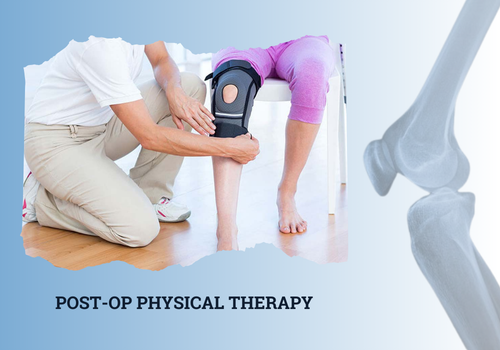
If you only remember one sentence from this page, remember this: the surgery is half the job. The other half is the next 6 to 16 weeks of rehabilitation. Surgeons can give you a perfect implant or a perfect ligament repair. Without rehabilitation, the joint will be stiff, weak and painful for years.
The post-operative physiotherapy unit at Dr. Swaroop's Ortho and Polyclinic, Wakad runs structured protocols for every surgery Dr. Solunke performs. The therapist who sees you on day one is in regular contact with the surgeon. Progress is reviewed every 2 weeks. The protocol is adjusted as needed.
Post-Surgery Rehab Protocols by Surgery Type
After Knee Replacement (Total or Partial)
Phase 1 - Hospital (Day 1 to 4): Walking with walker on day 1. Knee bending exercises in bed. Ankle pumps to prevent clots. Stair training before discharge.
Phase 2 - Early Outpatient (Week 1 to 4): Three sessions a week. Continued walker use, transitioning to stick. Knee flexion target 90 degrees by week 2, 110 degrees by week 4. Quadriceps strengthening starts.
Phase 3 - Strengthening (Week 4 to 8): Two sessions a week. Stick discarded for indoor walking. Exercise bike, pool exercises and progressive resistance training.
Phase 4 - Return to Activity (Week 8 to 12): One to two sessions a week. Long walks, light gym, return to driving and work. Functional retraining for stairs, getting up from chairs and Indian-style activities.
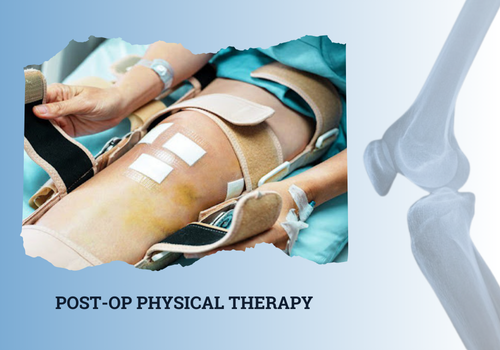
After Hip Replacement
Day 1 to 3: Walking with walker, sit-to-stand transfers, hip precautions training (no crossing legs, no bending past 90 degrees, no twisting). Bed exercises for the operated leg.
Week 1 to 6: Walker progressing to stick. Hip strengthening with bands and bodyweight. Strict adherence to hip precautions. Stitches removed at day 12 to 14.
Week 6 to 12: Stick discarded. Hip precautions relaxed at week 6 to 12 depending on surgical approach. Return to driving, light gym, swimming and stationary cycling.
Month 3 onwards: Full activity return. Yoga, golf, recreational tennis with care.
After ACL Reconstruction
Week 1 to 2: Pain control, swelling management, knee bending to 90 degrees, quadriceps activation.
Week 3 to 6: Full knee flexion, partial weight-bearing transitioning to full, gait retraining, single-leg balance.
Week 6 to 12: Strengthening, jogging on a treadmill, plyometric basics, sport-specific drills.
Month 3 to 6: Return to non-contact sport activity, agility training, full strength testing.
Month 6 to 9: Return to contact sport with clearance based on functional testing. Premature return is the leading cause of re-tear.
After Rotator Cuff Repair
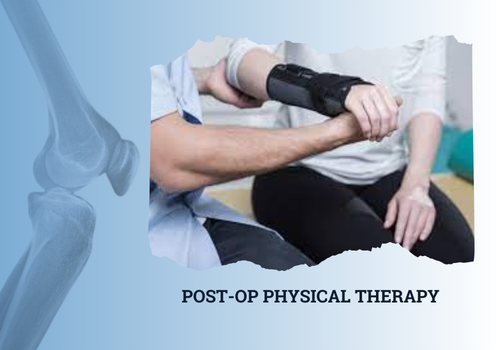
Week 1 to 4: Sling immobilization. Passive range of motion only - the therapist moves the arm; the patient does not lift it actively.
Week 4 to 8: Sling discontinued. Active assisted range of motion. Light pendulum and table-top exercises.
Week 8 to 12: Active range of motion against gravity. Initial light resistance band work.
Month 3 to 6: Progressive strengthening, return to overhead activities, return to sport for non-contact disciplines.
After Spine Surgery (Microdiscectomy or Laminectomy)
Week 1 to 2: Walking, gentle nerve gliding, posture awareness. No heavy lifting, no twisting, no prolonged sitting.
Week 2 to 6: Core strengthening with neutral spine, ergonomic re-education, gradual return to office work.
Week 6 to 12: Progressive strengthening, return to gym basics, full return to work and most activities.
After Fracture Surgery
Specific to the bone fixed. Range of motion of nearby joints starts on day 1. Weight-bearing progression is determined by the surgeon based on fracture pattern and fixation. Strengthening starts when bone healing is confirmed on X-ray, usually at 6 to 12 weeks.
Why Post-Op Physiotherapy at the Same Clinic Matters
There is a real advantage to doing post-operative rehabilitation in the same building where the surgery was planned and where the surgeon practices. The therapist sees the operation notes. Concerns are escalated to the surgeon within hours, not days. X-ray and clinical re-assessment are quick. Protocol adjustments happen in real time.
The clinic's physiotherapy unit handles approximately 80 percent of Dr. Solunke's post-surgery patients. The other 20 percent live too far for regular travel and are connected with vetted physiotherapists in their area, with the protocol shared in writing.
Pricing for Post-Op Physiotherapy
- Standalone post-op session (45 minutes): Rs. 600 to Rs. 1,000
- Knee replacement rehab package (20 sessions): Rs. 12,000 to Rs. 18,000
- Hip replacement rehab package (15 sessions): Rs. 9,000 to Rs. 14,000
- ACL reconstruction rehab package (40 sessions over 6 months): Rs. 22,000 to Rs. 32,000
- Home visits in Wakad, Hinjewadi, Aundh, Baner, Pimple Saudagar: Rs. 200 to Rs. 400 additional per visit
Many patients prefer outpatient packages because they include progress reassessments and minor protocol adjustments. Insurance coverage for outpatient rehab is limited in India, but corporate wellness programmes occasionally cover it.